
Logan and Albert Conservation Association
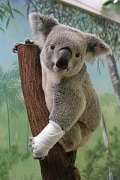 'New research makes roads safer for koalas' is the statement released on Monday, 16 February 2009 by Minister for Main Roads and Local Government
The Honourable Warren Pitt. The press release is quoted towards the end of this article.
While it is commendable that the minister and his Departments recognize the terrible impact that road construction has on the mortality of koalas and other animals, this 'solution' is not recognising the major impact on the long term survival of koalas in SEQ and elsewhere.
The greatest cause of decline for koalas is LOSS OF HABITAT for any reason. The future proposal for huge increases in population to SEQ, Logan Ipswich and Scenic Rim Region in particular, will result in habitat loss for koalas for both human dwellings and infrastructure deemed necessary those people.
We all, as residents in SEQ, are being invited to have our say on the Draft SOUTH EAST QUEENSLAND REGIONAL PLAN.
Submissions are due by 3 April, and to assist you to understand what is proposed and to help you with your submission, the Environmental Defenders Office EDO is to hold a workshop in Logan 14 March with WPSQ Logan Branch and LACA our group. See the events page for more details.
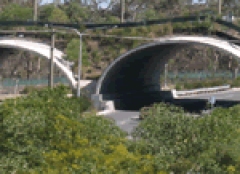
As conservationists, we would prefer that better road design principles received research funding in order to prevent koalas and other creatures from entering roadways in the first instance. Southern states better protect their wildlife by using barrier fencing to prevent all animals from road access and to lead them towards specially constructed fauna crossings eg our single local Compton Road fauna overpass. The use of temporary or permanent Fauna Proof Fencing would prevent animals on the road or median strip and the unnecessary death of juvenile koalas whichwere typically unable to climb the specially designed structures.
 We are very cautious of the value of this research and have yet to see any reports.
MEDIA RELEASE
New research makes roads safer for koalas
Koalas will be safer around roads and roadworks thanks to a Queensland Government research initiative that is making roadside barriers more wildlife friendly.
Main Roads Minister Warren Pitt said the research had uncovered methods that would allow koalas trapped between roadside barriers on busy roads or roadworks to climb out to safety.
He said manufacturers of roadside barriers had also been asked to make design changes that would allow koalas to scale the sides of the barriers and return to the bush.
"The solutions developed as a result of this research initiative have the potential to save the lives of many koalas each year on Queensland roads," Mr Pitt said.
"Main Roads, in consultation with the Australian Wildlife Hospital and the Environmental Protection Agency (EPA), has run a series of trials involving koalas crossing the safety barriers typically used in road construction work.
"These barriers are essential to protect roadwork ers, motorists and pedestrians during works but, unfortunately, also pose a significant risk to koalas.
"The trial found identified that koalas which go around the barriers to cross the road can become trapped if they are unable to climb the barriers on the other side.
"Research from the University of Queensland shows that 26 per cent of koala deaths each year in south-east Queensland's Koala Coast area can be contributed to high-speed road environments.
"While roadwork sites are thought to account for only a small percentage of this annual mortality rate, the State Government is committed to reducing this overall figure.
"Improving facilities around roadworks is just one way we can help prevent koalas dying on our roads."
The trial involved testing two concrete and plastic barriers to determine the ability of mature and juvenile koalas to climb over the barriers, and also examined what materials would make climbing easier.
Key findings of the trial included:
• Most adult koalas showed an ability to climb over plastic barriers using the grooves in the structure.
• Juveniles were typically unable to climb the structures because they were unable to get a grip on the top of the structure.
• In some instances, smaller animals (juvenile and sub-adults) used the fork-lift holes in the bottom of plastic barriers to climb through the barrier.
• Installing mesh to barriers, particularly on permanent concrete barriers, improved a koala's ability to climb over the barriers.
Of these findings, the main recommendations included:
• incorporating the mesh material on barriers in locations where koalas were likely to attempt to cross would be beneficial. This material should not affect road user safety or reduce the structural integrity of the barrier.
• discussing suitable design solutions with various manufactures to try to get a temporary barr ier safety design that is more fauna friendly.
"This research can help both Main Roads and safety barrier manufacturers design future barriers that are more koala friendly," Mr Pitt said.
 "Main Roads is committed to undertaking trials and pilot programs to improve environmental outcomes on project sites and is now discussing the results of this trial and the need to undertake design modifications with barrier manufacturers.
"The koala is our state's faunal emblem and an international icon, and the State Government is committed to looking at new ways to protect them."
Several years of study of the wildlife land bridge crossing in Compton Road are showing that this fauna sensitive road design is reducing road kill, also euphemistically called road ecology.
The draft SEQRP includes reference to many arterial roads criss-crossing the landscape. This will leave pockets of habitat for fauna - unless our model for development changes. Come along to community workshop 14 March at Chambers Flat Community Hall to learn more about having your say for the future of SEQ. See events page for more details.
PLEASE SLOW DOWN IF YOU ARE DRIVING IN AN AREA MARKED OR KNOWN TO BE USED AS A WILDLIFE CORRIDOR.
| Su | Mo | Tu | We | Th | Fr | Sa |
|---|---|---|---|---|---|---|
| 1 | 2 | |||||
| 3 | 4 | 5 | 6 | 7 | 8 | 9 |
| 10 | 11 | 12 | 13 | 14 | 15 | 16 |
| 17 | 18 | 19 | 20 | 21 | 22 | 23 |
| 24 | 25 | 26 | 27 | 28 | 29 | 30 |
| 31 |