
Logan and Albert Conservation Association

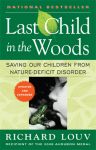 Geoffrey Woolcock Associate Professor at Griffith University’s Urban Research Program was one of the Australian delegates at the OECD World Forum Measuring and Fostering the Progress of Societies in Istanbul in 2007. Much has been written in the current decade about children's lack of contact or opportunity for contact with natural areas - areas of bushland wilderness and creeks which have not been changed by human actions or activities. He recently delivered a talk Unnaturally natural? where he reported on the work of Richard Louv, the American author of the award-winning book Last Child in the Woods.
Geoffrey Woolcock is a keynote speaker at Logan City's inaugral LOGAN ECO ACTION FESTIVAL 2010.
Louv’s book has compiled research from around the world, arguing forcefully for children to be reintroduced to the wilderness.
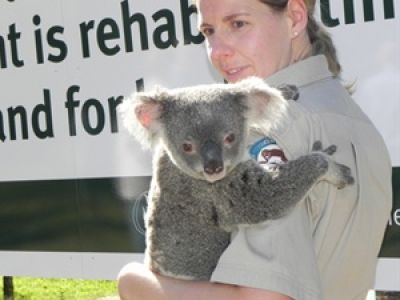 LOCAL councils have been given ultimate control over development proposed for koala habitat and charged with increasing habitat areas by 2020 under new State Government laws announced in the Redlands on Saturday. Sustainability Minister Kate Jones and Planning Minister Stirling Hinchliffe visited a koala revegetation site in Capalaba West to announce the two new pieces of legislation, which will dictate how developers and councils use land in order to increase koala habitat substantially by 2020.
"The new laws will deal with irresponsible planning which has occurred in some places in the past and override existing planning schemes so that koala habitat must be taken into account," Ms Jones said.
"Councils gave us overwhelming feedback that they were best placed to tailor localised solutions," Mr Hinchliffe said. "The main objective is that planning schemes must incorporate provisions to ensure development in koala areas delivers a net increase in koala habitat by 2020," he added. The new State Planning Regulatory Provisions (SPRP) place strict limits on developers, including banning clearing of mapped koala habitat, offset planting for unavoidable clearing of koala trees at a ratio of five trees planted for every one cleared, and requirements for koala sensitive urban design.
The new State Planning Policy (SPP) will see councils amend their planning schemes to identify and protect koala habitat while retaining and enhancing habitat connectivity with koala corridors. Councils will also have to increase the amount of bushland habitat, ensure koala movement-friendly design and layout for developments and develop a koala conservation strategy, which will be reviewed by the state to show how outcomes are being met.
The discussion of food security for the future is one which we should all consider.
Michael Lardelli is Senior Lecturer in Genetics at The University of Adelaide. Since 2004 he has been an activist for spreading awareness on the impact of energy decline resulting from oil depletion. He has written numerous articles on the topic published in The Adelaide Review and elsewhere, has delivered ABC Radio National Perspectives, spoken at events organised by the South Australian Department of Trade and Economic Development and edits the (subscription only) Beyond Oil SA email newsletter. He has lectured on "peak oil" to students in the Australian School of Petroleum.
His article was first published May 6 2010 by Energy Bulletin, Archived May 6 2010 and has been published in On Line Opinion here.
The concluding paragraphs of the well researched article state
By 2050, if Australia is to survive as a nation, our agriculture will need to have adapted to climate change, instituted radical measures to recapture and recycle nutrients (e.g. using human and animal wastes as fertiliser) and have, somehow, compensated for the loss of cheap and plentiful fuel. We have not even begun to move in the direction of the more local, intensive but lower energy agriculture that will be necessary and we have less than four decades to accomplish it! In the face of these challenges it is highly unlikely that we will be able to support 36 million people. Indeed, even supporting our current population might prove a significant challenge.
 Free community festival in Logan City
to celebrate World Environment Day and
2010 INTERNATIONAL YEAR OF BIODIVERSITY
Wildlife shows, exhibits, music, demonstrations and hands-on workshops, organic food markets, activities for kids, giveaways, eco fashion, speakers, presentations, electric cars, Daisy Hill Koala Sanctuary, speakers, eco fashions and much more. http://www.logan.qld.gov.au/leaf/
Building a child friendly Logan - Saving our children from Nature Deficit Disorder at 3.15 pm by Geoffrey Woolcock will be an eye-opener and maybe a mind opening experience for those who attend. Amid all the rush to build new master planned satellite cities in our so called greenfield areas, will the developers and our governments take this aspect into consideration?
All photography must be the work of the photographer.
Family pets, zoo animals and farm animals are not acceptable subjects.
There is no limit to the number of entries submitted, but a separate entry form must be submitted for each 4 photos.
Entry fee is $5.00 per photo, with the fourth photo free.
Entrants in the 12 years and under section enter for free.
Appropriate entry fees must be paid for entries to be accepted. Fees are to be paid by Direct Deposit.
All entries have to be received by midnight 10 July 2010.
Winning photos will be professsionally printed and mounted and put on display at the Scenic Rim Wildlife Expo in Beaudesert 18 July 2010.
Open winners will receive $190 worth of professional digital processing from PicsOn DVD.
Junior winners will receive 12 month subscription to Wildlife Australia magazine from Wildlife Queensland.
All photos are to be submitted via Flickr.com.
If you do not have a Flickr account you will need to set up your own account. (Flickr accounts are free to set up)
Once photos have been uploaded to your account, they must be tagged with "lacaphotocompetition2010".
Please ensure also that the photo title matches the title used on the entry form.
From your Flickr home page, click Groups from the top menu. In the box labelled Find a Group, type in LACA.
This should find the group called Nature photography of Scenic Rim 2010 competition. Join this group.
Once you have accepted the Group rules, you are able to upload your Competition Photos.
Photos must be at least 1000 pixels on their longest side and 300 dpi resolution.
CHECK BACK HERE FOR ONLINE ENTRY FORMS - COMING THIS WEEKEND!
All Queenslanders are invited to have their say on the Queensland Government’s Draft Queensland Greenspace Strategy.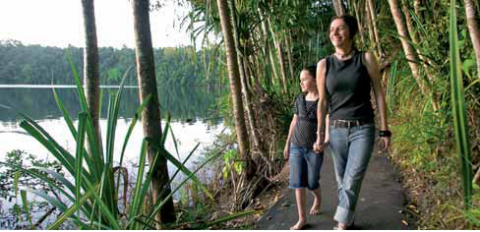
The draft strategy contains proposed planning actions for securing 50% more land for public recreation by 2020.
DIP would like you to tell government infrastructure how you think these draft actions should be prioritised and whether there are any additional actions that should be considered.
For more information, go to www.dip.qld.gov.au/greenspace
Submissions can be made by completing the online submission form and sending your response via:
Email: This email address is being protected from spambots. You need JavaScript enabled to view it.
Responses must: be made by 5pm on Friday 7 May 2010
include the name and address of the respondent and be a structured response under the headings of the supplied submission form.
 Today marks forty years since the commencement of Earth Day. Before you just dismiss it as another day, take a moment to reflect on all those people who are devoted to making a difference and what each of us can do in our daily lives to help our shared home on planet earth.
Forty years after the first Earth Day, the world is in greater peril than ever. While climate change is the greatest challenge of our time, it also presents the greatest opportunity – an unprecedented opportunity to build a healthy, prosperous, clean energy economy now and for the future. Earth Day 2010 can be a turning point to advance climate policy, energy efficiency, renewable energy and green jobs.
Earth Day Network is galvanizing millions who make personal commitments to sustainability.
Earth Day 2010 each 22 April is a pivotal opportunity for individuals, corporations and governments to join together and create a global green economy. Join the more than one billion people in 190 countries that are taking action for Earth Day.
The Scenic Rim's
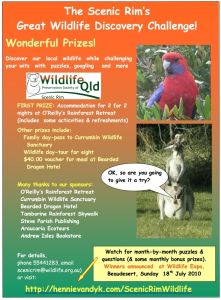 Over the next few months Wildlife Scenic Rim (branch of WPSQ) is presenting a series of puzzles and quizzes. Then at the Wildlife Expo in Beaudesert on Sunday 18th July the winners will be announced for the final prizes:
First prize:
Accommodation for two for two nights at O'Reilly's Rainforest Retreat, including refreshments and guided walks.
Other prizes:
Family pass for Tamborine Rainforest Skywalk, family pass for Currumbin Wildlife Sanctuary,
Wildlife Day-tour with Araucaria Ecotours,
Meal voucher for Bearded Dragon Hotel, various nature books.
The Challenge will help you to learn a lot about our local wildlife while offering you some wonderful opportunities for enjoying it.
If you'd like to help promote this by displaying the flyer, download the picture on the left as a pdf file
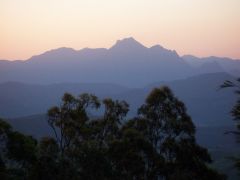 The Gondwana Rainforests of Australia represents over 50 separate reserves ranging from southern Queensland to Barrington Tops near Sydney. First listed in 1986 this World Heritage Listed property of sub tropical and temperate rainforests has been extended in recent years. It is an outstanding record of flowering plants, true songbirds and other rare and threatened animals of the most ancient lineage.
According to community representative Richard Zoomers, “What makes it so special is that it is a record of the past and a window into the future. New discoveries continue to be made as we better study the mysteries of these unique habitats of conservation.”
“And we have this in our own backyard. The Scenic Rim is at the heart of the Queensland section and is a hotspot of biodiversity in Australia. However huge pressures are constantly being exerted requiring careful monitoring,” he said.
The management of Gondwana is overseen by both the Queeensland and NSW Wildlife services. Two advisory committees of scientific and community representatives also make significant contributions to decisions affecting the future of this remarkable wonderland.
“These committees provide the chance for the community to have their input on a whole of property scale to deal with threats, day to day management, community engagement and promotion.”
Richard will be giving a presentation on Gondwana, its values, threats and management
Logan and Albert Conservation Association’s monthly meeting
Thursday 25 March at 7.30pm
Beaudesert Arts and Community Information Centre.
Everyone is welcome
VAST satellite cities could be built between Brisbane and the Gold Coast to ease the crippling population pressures threatening southeast Queensland, according to Logan Mayor Pam Parker. Speaking on the Gold Coast at The Courier-Mail's Our Future Your Say forum, Cr Parker said the areas around Logan and Ipswich, which still held large tracts of greenfill land otherwise rare in the southeast corner, would be perfect for taking the strain off the major cities to the north and south which are already battling housing affordability and land availability problems.
"These areas (Logan and Ipswich) have vast greenfill space which could house satellite cities where people could live, work and play," she said.
"This would help to ease the gridlocked traffic on our freeways and pressures on our existing infrastructure." You can hear Mayor Parker's speech online at http://www.couriermail.com.au/news/queensland/push-for-satellite-cities-to-ease-population-pressure/story-e6freoof-1225836732561
She said Logan and Ipswich – often been viewed as poor cousins of the Gold Coast and Brisbane – would appeal to new arrivals wanting the best of both worlds without having to shell out the higher costs for housing in both centres.
She also said Logan would be able to offer a lower density of housing which would be attractive to new residents wanting room to grow their families, instead of living in confined apartments in the cities.
The second forum in The Courier-Mail's Our Future Your Say series, in partnership with Griffith University and the Brisbane Institute, drew about 60 people to Griffith University's Parkwood campus last night.
The Bligh Government has called a special summit on population growth for later this month and appointed a panel of experts to advise it how to ensure the state's lifestyle does not fall victim to urban sprawl.
Premier Anna Bligh has flagged a range of incentives for people who commit to living in regional Queensland and committed to drawing up a state migration plan.