
Logan and Albert Conservation Association

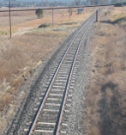 Queensland Transport has engaged Maunsell Australia to undertake preliminary planning and impact assessment for the Southern Freight Rail Corridor study (previously known as the Southern Infrastructure Corridor). The study's aim is to identify a potential route for a freight rail corridor connecting the western railway near Rosewood to the interstate railway north of Beaudesert (see map below). The Southern Freight Rail Corridor will serve as a major freight link connecting a future Melbourne to Brisbane inland railway with the existing south east Queensland rail freight network.
Queensland Transport website has information about the study and community participation and comment at this page.
Current phase
Queensland Transport has released the preferred alignment for the proposed Southern Freight Rail Corridor, connecting the western railway near Rosewood to the interstate rail line north of Beaudesert. A draft Assessment Report has been developed and is available for public comment. It is available here.
A community information day will be held on Saturday 18 October 2008 10am-4pm and community members are invited to speak with the study team about the project - location Peak Crossing Community Hall (Corner Fassifern Street and Hall Street), Peak Crossing.
Species
This recovery plan is a multi-species plan for wallum-dependent frog species of coastal south-east Queensland and eastern New South Wales. The species covered by this plan are the wallum sedgefrog Litoria olongburensis, Cooloola sedgefrog L. cooloolensis, wallum rocketfrog L. freycineti and wallum froglet Crinia tinnula.
Current species status
The species in this plan are listed as ‘Rare' or ‘Vulnerable' under state legislation, the Queensland Nature Conservation Act 1992 and the New South Wales Threatened Species Conservation Act 1995. However, only the wallum sedgefrog is listed under the Commonwealth Environment Protection and Biodiversity Conservation Act 1999 (EPBC Act). All species in this plan are listed as ‘Vulnerable' or ‘Endangered' by the World Conservation Union (IUCN).
Habitat and distribution
The species in this plan are wholly or largely restricted to lowland sand plains, dunes and sand islands of coastal south-east Queensland and New South Wales (including coastal ‘wallum'). All breed in oligotrophic (nutrient poor) acidic (pH < 6.0) coastal swamps and/or lakes.
Threats
The species in this plan have suffered significant habitat loss due to urban and resort development, the establishment of pine plantations and sand mining. Habitat loss and fragmentation due to urban development remains one of the main threats to wallum frog species, particularly in coastal south-east Queensland and northeast New South Wales. Other known and potential threats include habitat degradation, predation of eggs and larvae by introduced fish (in particular the mosquito fish Gambusia holbrooki), inappropriate fire regimes, use of biocides in weed and mosquito control, habitat disturbance and predation by pigs, chytrid fungus infection, a possible rise in sea levels as a consequence of global warming, competition with ecologically-similar species, exotic disease and vehicular traffic.
The fourth team from Conservation Volunteers Australia have spent a week clearing, weeding and PLANTING at last. Huge thanks to LACAs project manager Carla Parker for all her work in overseeing this stage of the project! Much mulching and staking should help with plant survival - but a regular team of volunteers to water as well as continue to plant is essential. Veresdale Scrub dry vine rainforest contains significant endangered plant species.
Thanks also to Scenic Rim parks staff for working with our team and organizing water supplies.
Photos will be added here soon.
The Greater Brisbane Area Consultative Committee (GBACC) is a non-profit organisation supporting regional growth in Brisbane, Logan and Redlands . It is part of the national network of Area Consultative Committees (ACCs) , which has been an important link between the Australian Government and rural and metropolitan Australia.
The Minister for Infrastructure, Transport, Regional Development and Local Government, the Hon Anthony Albanese MP announced on 20 March 2008 that as foreshadowed in the Government ' s key regional election commitments, Area Consultative Committees (ACCs) would provide the basis for the creation of Regional Development Australia (RDA).
Therefore ACCs will transition to become local Regional Development Australia committees. Recently forums have been held in both Logan and the Scenic Rim.
GBACC is providing via its website an opportunity for the local community to have a say in the transformation or transitioning process. Look here for the survey and details for sending. Also available there is the earlier submission to the ferderal government.
Both the GBACC's website and www.acc.gov.au will be updated frequently until the transition to RDA is complete.
Residents in the Scenic Rim are able to complete an online survey from this page for your views on regional development on the Gold Coast and the Scenic Rim.
Where the Scenic Rim fits is confusing to me. On its website, the Ipswich & Regional Area Consultative Committee Inc (I&RACC) states that it represents a diverse region, each with its own characteristics and very different demographics including Ipswich City, the Scenic Rim, Lockyer Valley and Brisbane Valley. Covering an area of 9,502 square km's, this region has a population of approx. 189,000. (ABS Data June 2004)
With significant population growth currently facing South East Qld (SEQ), the SEQ Strategic Plan has now been developed to provide some clear direction for planning into the future for this region. The plan has clearly identified the Western Corridor including the Ipswich region as a significant growth area. The projected population for the I&RACC region is expected to grow from 189,000 to approx. 300,000 by 2016 and 392,000 by 2026. The impacts of this growth will have significant bearing on available infrastructure, transport, water, technology and employment to service the population.
The I&RACC region has identified that this can be achieved by continuing to work towards developing sustainable communities within our regional centres that provide jobs in close proximity to residential areas and available amenities.
 Logan and Albert Conservation Association LACA ,Brisbane Region Environment Council BREC and Residents Action on Infrastructure Development and Environment RAIDE have been working with the EPA, Main Roads Metro, Main Roads Nerang and Logan City Council for the last 3 years to provide a dedicated fauna underpass immediately south of Stoney Camp Rd and Granger Rd (under the Mt Lindesay Highway) and to improve the environmental designs of the highway to facilitate local and regional fauna movement. This is part of the regional biodiversity corridor and is used by wildlife - eastern grey kangaroos koalas and other less visible to us fauna. Munruben Wetlands locally called Jerry's Downfall is also where the nationally endangered spotted tailed quoll has been 'spotted'.
Deacons a leading Australian law firm states it is a leader in helping organisations meet the challenges that climate change presents as the global environmental and economic challenge of the 21st Century They are work ing with clients to: develop low emissions infrastructure including buildings, transportation and stationary energy infrastructure projects; negotiate low emissions and green energy contracts; navigate the emerging carbon trading markets; and better understand the climate change issues arising in relation to development projects.
Just as importantly, the firm has led by example on environment issues, establishing its first internal ‘green teams' in 2003 and, more recently, a dedicated sustainability team charged with reducing the firm's greenhouse gas emissions by up to 30 per cent by mid-2008
Their speaking engagements, updates,news views and opinions are available here.
Environment and Planning article March 2008: Additional EPA approval now required for clearing least concern native vegetation - article by Melanie Simmonds on website for Deacons - a major law firm with many lawyers across Australia and Asia. The whole article can also be downloaded from that page
‘Least concern' plants are all plants indigenous to Australia, except those listed as threatened, rare or near threatened under the Nature Conservation Act. On 8 February 2008, the position in relation to clearing least concern plants changed due to the Environmental Protection Legislation Amendment Regulation (No 1) 2008, which repealed s7 of the NC Plan. Previously, a clearing permit from the EPA was only required if the plants to be cleared were threatened, rare or near threatened. Currently, a clearing permit from the EPA is required to clear any native plant.
Logan and Albert Conservation Association believes that the greatest threats to the long term survival of koalas in South East Queensland include loss of habitat to allow for expansion of the urban footprint and associated infrastructure and failure to identify Koala Conservation Areas by surveying.
Here we will endeavour to provide links to relevant reports, documents, websites, news stories, EPA documents and other resources that will help the reader follow the koala's path to the future.
Please contact us if you would like to contribute to this resource page.
This report from EPA : Report on Koala Coast koala surveys 2005-2006 has details regarding koala population decline - they do refer to Logan but it is only Logan in the Koala Coast Region (ie east of the Pacific Motorway).
Another report of interest is that detailing information about the requirement to have a koala spotter for clearing trees in District A. The file Tree clearing and trimming - Koala Spotter requirements is available here.
Some Terms used and explained include:
Clearing: the Koala Plan refers to the Integrated Planning Act 1997 for the definition of "clearing". Under this Act, clearing means remove, cut down, ring bark, push over or destroy in any way including burning, flooding or draining. It does not include destroying standing vegetation by stock or lopping a tree.
District A: is defined as the SEQ Region as per the SEQ Regional Plan. District A contains the highest koala population densities at the highest risk from threatening processes.
Koala Habitat Areas are identified as Koala Conservation Areas (KCA), Koala Sustainability Areas (KSA) or Urban Koala Areas (UKA).
Koala Habitat Tree: means a tree of any of the following genera: Angophora; Corymbia (gum tree), Eucalyptus (gum tree); Lophostemon (brush box or swamp box); or Melaleuca (paper bark or tea tree).
You can sign up to receive an EPA email newsletter fortnightly by sending a message with ‘subscribe' in the subject line to This email address is being protected from spambots. You need JavaScript enabled to view it.
The whole Queensland government Koala Conservation Plan and Management Plan 2006-2016 [6.32Mb] can be accessed or downloaded from this page - essential reading before the review of SEQ Regional Plan towards end 2008.
 YOUR INPUT IS NEEDED TO PROTECT KOALAS.
This week Premier Anna Bligh and Andrew McNamara , Minister for Sustainability, Climate Change and Innovation announced the urgent need for a koala taskforce and rescue plan. Recent reports predicted a decline in koala populations and that koalas could be extinct in South-east Queensland within the next 20 years.
Reports by GHD consultants for Moreton Regional Council showed a 46% decline in the last 6 years in Pine Rivers' urban koala population density, and an EPA report in 2007 showed numbers had dropped by 26% in the Koala Coast Region (Redlands Council).
While Logan and Albert Conservation Association agree with the summation of the report, this announcement comes after the Premier officially released 40 000 hectares of bushland for development under the guise of affordable housing, despite the protests of conservation groups in South-east Queensland.
Despite these predicted declines in koalas in South-east Queensland, massive development is still proposed for Logan City Council and Scenic Rim Regional Council areas with population increases of 30 000 for Park Ridge MPA, 25 000 for Greenbank, 60 000 for Flagstone and 60 000 for Yarrabilba as part of the SEQRP. The koala populations of Logan City and the Scenic Rim Region are still unknown. To date no official koala surveys have been conducted to identify and map Koala Conservation Areas. LACA believes Logan Council will conduct surveys in former Beaudesert Shire areas.
Matters taken into consideration by the inquiry included, but were not restricted to:
The ACCC provided its report to the Assistant Treasurer and Minister for Competition Policy and Consumer Affairs on 31 July 2008.
The grocery inquiry report is available by following the links on this webpage. No printed version of this publication is available. There is at no cost.