
Logan and Albert Conservation Association
As the American nation's leading conservation group creating urban parks and livable cities, The Trust for Public Land commissioned a report that addresses climate change and urban parks. Urban green space serves diverse purposes, ranging from neighborhood and city parks to river parkways, bike paths, and street trees, which in turn can produce different types of greenhouse gas benefits.
This white paper, prepared by ICF International, outlines the greenhouse gas benefits of adding green space to an urban area and introduces methodologies for estimating potential greenhouse gas reductions. The Trust for Public Land hope this paper will generate discussion about the need to create green livable cities, prompt new research on the benefits of parks to cities, and help government leaders in planning livable cities that reduce greenhouse gas emissions. 43 pages. Download the white paper [2.3 MB] from this page
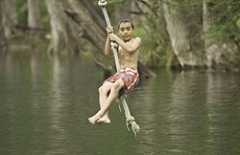 Today many factors conspire to keep kids indoors, yet a growing body of research indicates that the shift away from unstructured outdoor play is detrimental to healthy child development. Free play - especially in nature or at creative playgrounds - is essential to cognitive, physical, social, and emotional development.
Many experts have called attention to the issue, most notably author Richard Louv, whose best-selling book Last Child in the Woods: Saving Our Children from Nature-Deficit Disorder (newly revised edition) has been translated into six languages. "Passionate memories of a childhood spent in nature are nearly universal," Louv says. "It doesn't seem to matter what somebody's politics are or religion is. These memories are something we share in common. Except for younger people."
Stuart Brown, a neuroscientist and president of the American National Institute for Play, says that various factors have contributed to the demise of childhood play in nature. One is the perceived risk to children who are outside without adults, a perception derived from high-profile media stories about child abductions, which in fact are relatively rare. Another trend is that "free time" has become an oxymoron for many children, whose nonschool hours are packed with organized, achievement-oriented activities.
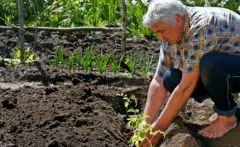 Tom Philpott farms and cooks at Maverick Farms, a sustainable-agriculture nonprofit and small farm in the Blue Ridge Mountains of North Carolina. It is also an educational farm dedicated to promoting family farming as a community resource and reconnecting local food networks. His article Toward a less efficient and more robust food system is a version of an address delivered before the High Country Local Food Summit where he spoke about how to create a robust, diversified food system. Read the article here in http://www.grist.org/article/2009-toward-a-less-efficient-and-more-robust/
The comparisons between specialized "city of the future" Manchester and Birmingham with a lot of little organizations doing bits and pieces of work for other little organizations ie working together, forming networks, and loose informal cooperatives provide food for thought. Birmingham flourished, Manchester did not.
Where will our food come from in the future?
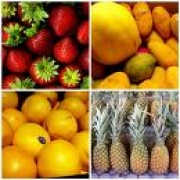 The ability to grow and interest in growing and eating our own locally produced food is growing. Alan Chenoweth (Chenoweth Environmental Planning & Landscape Architecture); Robert Pekin (Food Connect - an Australian leader in responsible food production and distribution) & Jan Power (Jan Powers Farmers Markets) are guest presenters at a free evening of presentations.
Title: PRODUCE, SHARE and ENJOY: Food in the city
What: Free public seminar featuring three exciting speakers
When: 06 May 2009 6:00pm
Where: The Brisbane room - Brisbane City Hall
Cost: FREE ADMISSION - BUT PLEASE BOOK A PLACE RSVP: 04 May 2009 12:00am 3220 2198 or Email www.brisinst.org.au
Food in the City ---- A step towards making Brisbane "local food smart"
 The Draft South East Queensland Regional Plan 2009-2031 adopts uncontrolled population growth, ignoring any consideration of a population cap for SEQ. Not to limit population growth is to accept that our lifestyles and environment will be destroyed irrevocably and that our water, mineral and other resources will be depleted sooner rather than later. Australian Bureau of Statistics (ABS) data shows that the population of SEQ is increasing at about 1.8 per cent per year; about 41% due to net overseas migration, 39% due to natural increase (the excess of births over deaths), and 20% attributable to net interstate migration.
In 2009, SEQ suffers from many population-induced pressures, including:
a. increasing road congestion;
b. increasing atmospheric and noise pollution;
c. increasing pressure on medical and education resources;
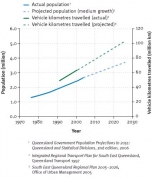 If you are concerned about how crowded South East Queensland will become according to these EPA projections of traffic growth through to 2030, MAKE A SUBMISSON TO DRAFT SOUTH EAST QUEENSLAND REGIONAL PLAN.
Redland City Mayor Melva Hobson said there were a number of important issues raised by the draft SEQ regional plan that the Redlands and other SEQ Council's wanted addressed, before the plan becomes final. There are serious gaps in infrastructure, including provision for vital transport links to meet past growth, let alone the substantial growth the new plan projects for the SEQ Region.
Logan and Scenic Rim residents know only to well the shortages and absences in many areas of acceptable public transport. Education and health provisions are also inadequate to meet the needs of the current population.
Community consultation processes can be withdrawn by the Minister. This also negates all the planning processes of the local council if the draft regulatory provisions are accepted and we allow the Minister to simply change the urban footprint by administrative fiat. Read article in the online bayjournal.com.au
 The Scenic Rim Regional Council has placed its 2009 submission to the Draft SEQ Regional Plan Review dated 30 March 2009 into the public domain. Since citizens now have an extended opportunity to comment on draft SEQRP until1 May 2009 you may wish to read and consider making your own new or revised submission. Read and download SRRC submission from this page.
Documents on that page include
 Community Engagement policy and strategy - our comments are sought on Logan City Council's draft Community Engagement policy and strategy. Completion of online form by
Friday 17 April.
The Community Engagement Strategy provides a framework for developing a consistent approach to community consultation and surveys across Logan City Council. It also includes an action plan for the Community Engagement Program for 2009.
Transport Development And Solutions Alliance TDSA is a Queensland statewide, non-profit, Community-based organisation committed to supporting and facilitating a collaborative response to improved transport access. Transport is a fundamental need of all people. And yet, in every community, there are individuals and groups whose quality of life is diminished because they cannot access either suitable and affordable alternatives to the private motor vehicle or mainstream public transport.
Developing and implementing sustainable transport solutions at the local or community level is essential to closing the gaps in the transport system that give rise to this situation. To successfully work on solutions to unmet transport needs in a community requires access and support from others who have the knowledge, skills and most importantly experience in doing this work. TDSA can possibly be that support to people in our community.TDSA will work collaboratively and respectfully, valuing diversity of opinion and experience, in ways that are credible, professional and effective in order to facilitate access to transport that meets the individual's and community's needs and thereby enhancing the quality of life.
TRANSPORT DEVELOPMENT and SOLUTIONS ALLIANCE
POSTAL ADDRESS PO Box 2038 Strathpine QLD 4500
CONTACT PERSON:
Sandy Dore Phone: (07) 3205 2955 Fax: (07) 3881 2877
Website http://www.tdsa.org.au/index.htm has links to policy and submissions. Information about the April conference can be downloadwd from this page
Redlands Council has made its submission and encourages residents to make submissions to the Queensland Government on outstanding issues in the draft SEQ Regional Plan. See here
SHOULD LOGAN CITY AND SCENIC RIM REGIONAL COUNCILS SHARE THEIR VIEWS AS OPENLY WITH RESIDENTS? Tell me if I missed the information on councils' websites. The same issues exist in Logan Scenic Rim Region and all SEQ council areas. What submission will council make to state government on our behalf? Do they know what our vision is?
A special general meeting of Redland City Council held on 10 March 2009 identified the following as key issues that remain to be addressed in the draft plan.