
Logan and Albert Conservation Association

 Xiang et al. show that in a Chinese village in an area endemic for fluorosis that the higher the fluoride in the children's blood the lower the IQ of the children studied. Pre-published by Environmental Health Perspectives (EHP) on Dec 17, 2010. Fluoride Action Network FAN's Press Release: Fluoride in Water Linked to Lower IQ in Children can be read here.
The whole peer reviewed research article publihed online at EHP can be read and downloaded here. EHP is a publication of the U.S. government. Publication of EHP lies in the public domain and is therefore without copyright.
To be completed
Research findings of effects of Fluoride are reported worldwide - more warnings of deleterious harm from over dose.
In today's society with greater access to information becoming better informed is relatively easy. It is also easier to publish in our digital world - but care is always needed to verify the credentials of those who publish and who benefits from disclosure - or non disclosure of information.
Professor Paul Connett states that without studies to investigate and validate all safety concerns there is no assurity. Authorities made decisions which have not been based on sound science. If you don't look you don't find the connections between fluoride and public heath concerns. The practice of fluoridation has been and is being protected before public health.
INTERNATIONAL YEAR OF FORESTS for PEOPLE
 International Year of Forests, 2011 (Forests 2011) website, is a global platform to celebrate people's action to sustainably manage the world's forests. The United Nations General Assembly declared 2011 as the International Year of Forests to raise awareness on sustainable management, conservation and sustainable development of all types of forests. Here, you will find information regarding events being organised throughout the International Year as well as interactive web tools and resources to promote dialogue on forests.
300 million of the world's people live in forests.
Forests cover 31% of or planets land.
80% of terrestial biodiversity live in the forests.
Forest products trade is valued at over $320 billion.
The world's forests provide livlihood food and shelter and are responsible for cleaning our air and the water cycle which recycles the earth's water. They are invaluable to mankind for providing an environment where in we can thrive. Man has yet to learn within the parameters of the global system to live in harmony with nature - using her bounty in a sustainable manner. Other species with whom we share the forest ar part if the interrelated connection of all species.
Yet despite what we know now about the richness and riches of the world's forests there are some - large corporations - who with government support and license continue to exploit those resources without paying the real costs.
INTERNATIONAL YEAR OF FORESTS for PEOPLE and the International Forest Film Festival aims to raise awareness on the importance of forests, their relationship with people and the planet we share, and consequently, to inspire a sense of personal responsibility/stewardship for a greener, more equitable, sustainable future.
The overall theme of the Festival will be: Forests for People, with sub categories:
Organic farming is the form of agriculture that relies on crop rotation, green manure, compost, biological pest control, and mechanical cultivation to maintain soil productivity and control pests. This however is achieved by excluding the use of synthetic fertilizers and synthetic pesticides; plant growth regulators, livestock feed additives, and genetically modified organisms. Organic farming benefits from the recycling and use of natural products. By supporting local, sustainable and organic farms in your local community you also support the larger community of which we are all a part. Organic farming is the way forward towards a healthier life and a cleaner environment. Words from Navdanya's Diary.
This journal is following the global situation relating to the food crisis, food security, impact of industrial agriculture on biodiversity and places our local - South East Queensland and nationally - food situation within the global context. This online journal by respected Indian scientist and
Give Mother Earth A Chance
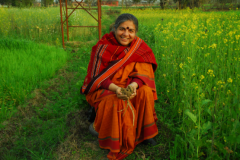 Dr Vandana Shiva is a physicist, environmental activist, author and eco-feminist. Speaking at the Sydney Opera House for the City of Sydney Peace Prize she delivers an incredible and inspirational lecture - online video here - Give Mother Earth A Chance. LACA members and supporters will be inspired . Watch here.
"If commerce starts to undermine life support, then commerce must stop, because life has to carry on." This is the central premise of Dr Vandana Shiva's passionate address in which she lambasts global corporations for waging war against nature in the name of profits. Shiva argues that when commonly used agricultural herbicides have names like "Round Up", "Squadron", "Avenge", one can see there is war being waged against nature...and the humans are winning at the cost of their own future. To Vandana Shiva, fighting for peace for 'Mother Earth' is the broadest peace movement we can engage in.
She calls for a form of 'Earth Democracy', that re-imagines the biosphere as a citizen, that has universal rights that need protecting and defending.
Vandana Shiva : Sydney Peace Prize Talk from WisdomKeepers Productions on Vimeo.
A world-renowned environmental leader and recent recipient of the 2010 Sydney Peace Prize, Vandana Shiva is at the forefront of the global Environmental and Earth Justice Movement. Dr.Shiva is the author of many books, including Earth Democracy, Water Wars, and Staying Alive. She brings a vital, passionate voice and practical solutions to the most important issues of our times. With Soil Not Oil, Vandana Shiva connects the dots between industrial agriculture and climate change. Shiva shows that a world beyond dependence on fossil fuels and globalization is both possible and necessary. Unwavering and truly visionary, Soil Not Oil proposes a solution based on self-organization, sustainability, and local community rather than corporate power and profits.
 Minister for Natural Resources, Mines and Energy and Minister for Trade The Honourable Stephen Robertson has recently announced new laws to reform the way Queensland Urban Utilities, Unitywater and Allconnex Water deal with their customers.
A new ombudsman service for water bill complaints also has been created
Read what the minister has announced here.
Mr Robertson said customers not happy with water bills could access a new Energy and Water Ombudsman Queensland from 1 January 2011.
Many residents of Logan have voiced their concerns about water charges and are very unhappy with the response from Allconnect as Jimboomba Times records in letters to the editor.
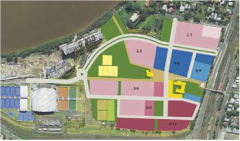 Yeerongpilly transit oriented development may provide some useful information for the Greater Flagstone area residents - may being the operative word. The Yeerongpilly TOD Concept Plan of Development supporting report outlines how the Yeerongpilly TOD may be developed over the next five to ten years and sets out strategies for various aspects such as transport, community development and environmental sustainability.
See the concept plan here. HAVE YOUR SAY.
The difference between Yeerongpilly and Greater Flagstone is that the former is to be built in an area which has already been developed - while Greater Flagstone is termed greenfield which means that there is currently no major development there. In order to 'manage growth' government prefers large landholders. Since these large landholders have been landbanking for future development - and financial gain.
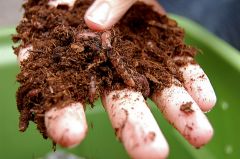 How our community gardening is growing in Logan and Scenic Rim
Gardening is an activity enjoyed by many residents in Logan City. There are many formal and informal groups that meet across all areas of Logan. Many grow flowers for their beauty, some grow food for the family table, many of us grow habitat plants for our local wildlife. What we all usually have in common is a willingness to share our surplus and share our knowledge of gardening.
Most of us are aware of the value of good soil and want to improve the productivity of our gardens - for food or flowers. Collectively we can achieve more at our local level. How much can we compost and create organic fertilizer or mulch from material others discard? Can we prevent it from going to landfill where it becomes a problem instead of the asset it can be.
I have always been an avid reader of gardening information - both the printed form and now online and for years have been reading great inspiring stories about people joining together to create community gardens in their local area.
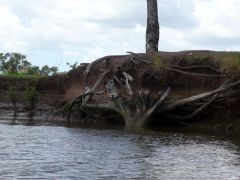
Following the release on Wednesday November 20 of the Healthy Waterways Ecosystem Health Report, in which the Albert and Logan Rivers each received fails for the second year in a row, general agreement has emerged within LACA and among other conservation groups across the region that the situation for this river/bay system is now critical and requires urgent new attention, NOT business as usual.
Continuation alone of the strategies put in place by SEQ Catchments and Healthy Waterways and responsible NRMs clearly will not provide the genuine on the ground, full system solutions that are now desperately needed. Their strategies, while clearly aimed at long term outcomes, have nevertheless been in place for ten years during which the rivers and bay areas in SE Qld have steadily declined, with the Logan/Albert/Southern Bay the worst performing system in
The need for a ‘Crisis
LACA members and others have expressed the view that urgent action is needed at a government/legislative level. To explore this and hopefully arrive at a collective decision, a ‘crisis summit’ on the rivers and bay has been proposed, to be held possibly in February 2011. As a ‘summit’ this will differ from the Logan City Council proposal for a ‘forum’. While a ‘forum’ usually involves open community access and input of ideas ending in a summary report, a ‘summit’ involves the key players and decision makers in a process of dialogue and collective decision making for action. However, the summit could take on board the information that might flow out of an earlier ‘forum’, so the two proposals are not necessarily mutually exclusive.
This issue encompasses the whole catchment area of the Logan and Albert Rivers, and as such includes the impacts on the system of major new development proposals including those at Flagstone, Yarrabilba, Bahrs Scrub and Bromelton. Accordingly, a ‘crisis summit’ would involve key decision makers from Federal, State and local government, landholders groups, Agforce, conservation groups, developers in the region, river based industry groups such as prawn farmers, tourism and amateur and professional fishing organisations. The starting point for the crisis summit should be the collective understanding that there is a ‘crisis’ in this system and that genuine new actions, possibly involving legislation, are needed in order to prevent the ecological and physical collapse of the river/bay system.