
Logan and Albert Conservation Association

Logan City Deputy Mayor, Councillor Russell Lutton, in supporting the new structure and leadership team, commended the decision to establish the new City Leadership Cabinet and said that the new Cabinet has been appointed to oversee the direction of the city and to ensure improved process and quality of decision-making in Standing Committees.
The new structure and leadership team were formally ratified at a Special Meeting of Council May 19, 2009.
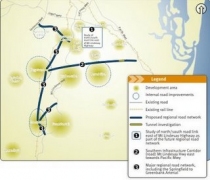 Cardno Eppell Olsen are the consultants for the Mt Lindesay/Beaudesert Strategic Transport Network Investigation which aims to determine the long term (50 years) transport needs in the Mt Lindesay - Beaudesert area. The study investigates potential future land use scenarios and assesses transport system options for the future. The study recommendations will be used to guide future planning for the area.
This study by the Department of Transport and Main Roads is looking at the longer term transport needs of the Mt Lindesay/Beaudesert region over the next 50 years and will identify the strategic level transport options required to support the expected growth in the area. The findings will help state and local governments plan now for the delivery of future transport networks.
The draft report can also be viewed at the following locations until 12 June:
• Beaudesert QGAP;
• Logan City Council Customer Service Centre;
• Scenic Rim Council Office (Beaudesert)
• Greenbank, Jimboomba, Logan Village and Logan West Libraries.
Public comment and submissions on the draft report are invited until 12 June 2009 and will be considered in the final report.
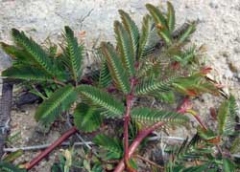 The hunt is on for a pest weed being grown as a vegetable commonly used in Asian dishes.
Water Mimosa is the worst kind of weed in Queensland - a Class 1 declared weed that is highly invasive and endangers waterways. Minister for Primary Industries, Fisheries and Rural and Regional Queensland Tim Mulherin is asking south-east Queensland communities to help find it. "Water mimosa is an aquatic weed that can release nitrogen into waterways, which affects water quality and can lead to increased algae," Mr Mulherin said.
"The nitrogen levels also create the perfect growing environment for other declared water weeds, which kill our native wetland plants and fish."
Class 1 declared weeds are subject to eradication from the state and Biosecurity Queensland and local government officers will be out to track down this dangerous weed. Biosecurity Queensland is undertaking an awareness campaign to educate the public about why water mimosa is a declared weed and what their responsibilities are in relation to eradicating the weed.
How did our grandparents survive without all the modern conveniences 'mod cons' that we have access to today? This website www.theshoppe.com.au has an invaluable wealth of information on common kitchen ingredients that can be used for cleaning - these are what I use. This information is taken from a free downloadable newsletter.
Environment Minister, Peter Garrett said Australian homeowners will be able to make their homes more energy and water efficient with 1000 home sustainability assessors ready to begin work and credit providers signed up to commence the rollout of the Green Loans Program from July 1.
"Through Green Loans we are making it easier for 360,000 Australian homeowners to learn what they can do to make their homes more energy efficient from an accredited assessor.
"The fact is that for many households the assessor will identify simple, low-cost actions like changing light globes, sealing draughts and repairing leaking taps.
"However, there will also be larger-scale recommendations, many of which can now be adopted at a reduced or zero cost thanks to the Government's unprecedented investment in energy efficiency - namely installing solar PV or solar hot water or ceiling insulation. Solar hot water and insulation are two of the most cost effective energy efficient changes household can make.
"And now, with the launch of Green Loans, we're also providing the opportunity for householders to access up to $10,000 for other alternate changes, enabling them to be well and truly equipped for a low pollution future."
Mr Garrett said in light of the Government's $4 billion investment in energy efficiency, lower interest rates and major shifts in the global financial markets, some changes had been made to the scheme to ensure that it is better focused:
Household assessments for 360,000 households will now come at zero cost and will no longer be tied to the loan.
Minister Garrett said home owners wishing to participate in the Green Loans Program follow three steps:
For more information on the Green Loans Program including a full list of eligibility guidelines visit www.environment.gov.au/greenloans
 Due to the overwhelming success of last years 2008 'Are you poisoning yourself?' seminar, Griffith University EcoCentre repeated the event in May 2009. The following presentations provide information about the potentially dangerous toxins we expose ourselves to everyday. These toxins are easily avoidable when you know what to look for.
The EcoCentre has published the presentations on its website and they can be accessed from this page.
Lisa Malcolm is an environmental scientist at the EcoCentre. Lisa's presentation1 will assist you to create a healthier home by making informed choices on cleaning products and safer use of plastics.
Narelle Chenery, back by popular demand, is a world wide educator and activist. She revolutionsed the beauty industry by creating the world's first certified organic skin and personal care range. Narelle's presentation2 outlines the hidden dangers of the cosmetic industry.
Dr Greg Emerson is the founder and Medical Director of the Emerson Health and Wellness Centre and co-director of Nutritional and Environmental Medicine QLD. Dr Emerson's presentation3 demonstrates the body's intrinsic ability to heal itself if the underlying cause of the illness (which can include environmental toxins) is removed.
 Visit Share Our Pride to learn more about Aboriginal and Torres Strait Islander culture. The site provides introductory cultural awareness training content as well as listings of events in your State and Territory, book reviews and useful links.
Share Our Pride is the perfect place to start your cultural awareness journey.
Reconciliation Australia acknowledges the traditional owners of country throughout Australia and their continuing connection to land and community and pays respect to them and their cultures, and to the elders both past and present.
Reconciliation Australia has launched a national study that looks at the relationship between Indigenous and other Australians. Designed to be repeated every two years, the Barometer explores how we see and feel about each other, and how perceptions affect progress towards reconciliation and closing the gap.
NAIDOC stands for the National Aboriginal and Islander Day Observance Committee. Its origins can be traced to the emergence of Aboriginal groups in the 1920s which sought to increase awareness in the wider community of the status and treatment of Indigenous Australians.
The Living in 2030 Environmental Curriculum challenges students to examine the state of our planet in the Year 2030 if we continue with a ‘business as usual' scenario, and take no action to halt global warming. This program has been designed and developed by Global Green Plan.
The Living in 2030 Environmental Curriculum takes a ‘learning by doing' approach to environmental education. Increasingly student driven, the Living in 2030 activities and projects are designed to encourage students to come up with real solutions to real problems.
The Living in 2030 Environmental Curriculum fosters initiative, responsibility, leadership and teamwork. Students who participate in the Curriculum experience a sense of achievement and empowerment at their ability to make a difference in the face of increasingly frightening, and overwhelming, predictions about our planet. Living in 2030 students also report a heightened awareness and understanding of their community, as the Curriculum encourages interaction between the school, households and the wider community.
As well as learning about the environment, Living in 2030 students come away with valuable skills in the areas of communication (in particular, the internet and website construction), data management, critical evaluation, risk analysis and information technology.
The Living in 2030 Environmental Curriculum is designed for middle school classes (Years 7-10). It also provides extension opportunities for gifted or talented students, and classes that choose to take their 2030 experience further.
The Living in 2030 Environmental Curriculum is currently being taught at Williamstown High School, and is available for implementation by other interested schools. Contact This email address is being protected from spambots. You need JavaScript enabled to view it. if you or your school would like more information about the Living in 2030 Curriculum.
Affordability versus Sustainability in the Built Environment is a PODCAST from Griffith University Business School [14 April 2009]
What role does transport play in creating affordable and sustainable built environments? What are the wider costs of current transport options? And how can car sharing and personal transport increase the affordability and sustainability of housing, commercial developments and precincts?
Find out the challenges of built environments in this context with our first podcast from the 2009 "Sustainability in Business Series".
This podcast is approximately 1.5 hours long and can be listened to or saved here.
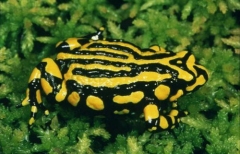
Although the Corroboree Frog is not a species found in our local biodiversity, all plans for its recovery and survival are applauded by us.
Efforts to save one of Australia's most recognisable frogs, the Corroboree Frog, from extinction were boosted with the launch of the Corroboree Frog Conservation Trust Fund.
Minister for the Environment, Heritage and the Arts, Peter Garrett, officially launched the Trust at the Wonga Wetlands Education Centre on the Murray River near Albury.
Many Australians know Corroboree Frogs by their bright yellow and black markings. Sadly, the Corroboree Frog is seriously threatened with extinction and preservation efforts are at a critical stage.