
Logan and Albert Conservation Association
INVITATION to PUBLIC MEETING
Monday 22 February 2010
Jimboomba Tavern
6:30-8:30pm
Cnr Mt Lindesay Highway & Cusack Lane JIMBOOMBA
There are signifigant patches of Melaleuca Irbyana in the Jimboomba and surrounding areas. Use of the phrase Swamp Tea-tree Forest is not common - but indicates that more than the single species has federal protection. No species - plant or animal - exists in isolation but is part of an interconnected web - much of which the lay person may not know about.
Are you a landholder - or caring tenant - with this endangered ecological group of plants?
You are most cordially invited to an Information Session to find out about these vegetation types, the legislation protecting them and the opportunities available to assist with their management. Questions such as:
What is the significance of having endangered Brigalow or Swamp Tea-tree Forest on your property? will be addressed.
The following specialists will be on hand to brief you about the project and to answer any further questions you may have: Liz Gould: Environment Sector Partnerships Manager - SEQC - South East Queenlsland Catchments Association.
For catering purposes please RSVP
Ben Barton, Community Contact Officer Bremer, SEQ Catchments, West Ipswich Q 4305 Ph 07 3816 9721 Fax 07 3812 8685
This event is being co-hosted by Logan City Council, SEQ Catchments and LACA - Logan and Albert Conservation Association.
2010 SPOTLIGHT ON WILDLIFE IN SCENIC RIM - series of community workshops sponsored by SRRC
 To help celebrate the 2010 United Nations International year of Biodiversity , the Logan and Albert Conservation Association will be hosting a series of free public workshops entitled 'Spotlight on Wildlife in the Scenic Rim'. The workshops have been funded through a Community Environment Assistance Grant from the Scenic Rim Regional Council.
The first 2010 WORKSHOP will be held in Canungra where there is a significant colony of bats and where recently there was a crisis to save the babies after a storm devestated their usual bat family nursery habitat. The workshop will help us all to become more aware of the signifigant contributions this family of flying marsupials makes to our shared environment and how we can all live safely and harmoniously together.
The Canungra workshop will include guest speakers Louise Saunders from Bat Care Brisbane Inc, Janet Gamble from the wildlife section of the RSPCA and local zoologist Ronda Green.
 The world we share with other species of nature - all co-existing on the one plant and sharing the same biosphere - has many life skills to share with us - if we can only see and understand. Tom McKeag who teaches bio-inspired design at the California College of the Arts and University of California, Berkeley has nominated his 2009 Tommy Awards.
He has also decided to give the awards to the creatures that inspired the innovation, rather than the human inventors. This is an amazing new non-destructive application of technology and a whole new world for design.
The penguin, in the strictest biomechanical sense, doesn't really swim underwater, but rather flies. That is, the creature gets both lift and thrust from the action of its flapping, planar wings. It has inspired the latest development in robots highlighted by the German engineering firm Festo AG at the Hanover Messe Trade Exhibition in April.
The Aquapenguin mimics the hydrodynamic body features of the bird and is made with soft material and glass fibre rods, a motor and 3D sonar device by Evologics of Berlin. These allow the bot to swim with great flexibility and avoid collisions with obstacles or other swimmers, important in situations demanding a high degree of flexibility and autonomy. Festo has already developed a commercial product, an industrial arm with a gripper end, based on this technology.
UN Secretary General Welcome Message for the 2010 International Year of Biodiversity from CBD on Vimeo.
The United Nations declared 2010 to be the International Year of Biodiversity. At the Johannesburg Summit 2002 the international community set itself the goal of making a "substantial reduction in the rate of loss of biological diversity" by 2010 but this is not happening. In fact biologists talk about sixth extinction wave and they estimate that the rate of species extinction is about 1,000 times higher than the natural background rate, mostly because of human activities: habitat loss, exploitation and climate change.
Janine Benyus shares nature's designs
Transcript of a TED TALK
It is a thrill to be here at a conference that's devoted to "Inspired by Nature" -- you can imagine. And I'm also thrilled to be in the foreplay section. Did you notice this section is foreplay? Because I get to talk about one of my favorite critters, which is the Western Grebe. You haven't lived until you've seen these guys do their courtship dance.
Professor Jonathan Hill, the head of the school of Veterinary Science at the University of Queensland, says once a Hendra virus quarantine has been lifted, any concern about any of the horses on property where Hendra virus had been is misplaced. It is indeed uncessary misfortune to have sound horses devalued as a result of exposure. When people who contact or walk into infectious diseases and don't get the disease, we know that they are not infected. Professor Jonathan Hill says the horses are not damaged goods just because they have been on a stud which had horses that had Hendra virus. In fact you could say that they have been tested to be 100 per cent certain of being clear, which puts them in a unique spot.
Professor Hill says such misconceptions stem from a lack of knowledge about Hendra virus, which need to be addressed with research.
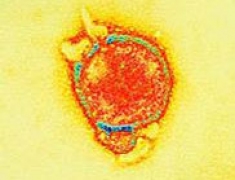 CSIRO scientist Dr Deborah Middleton works in the field of Transforming Animal Biosecurity - Livestock Industries and she is the theme leader for this reseach.The research results are published online in the very scientific journal plospathogens or it is available from links as part of the media release. ABC news reported on this 31 October 2009.
The CSIRO is claiming a breakthrough in the battle against the deadly Hendra virus.
A scientific team from the CSIRO and the United States has developed a serum which gives a good level of protection to ferrets exposed to the similar Nipah virus.
They demonstrated that administering human monoclonal antibodies after exposure to Nipah virus protected the animals.
The CSIRO's Dr Deborah Middleton, who led the experiments at Geelong's maximum biosecurity facility, says the findings are extremely encouraging. "Our research clearly suggests that an effective treatment for Hendra virus infections in humans should be possible, given the very strong cross-reactive activity this antibody has against Hendra virus," she said.
"As Hendra and Nipah viruses cause severe disease in humans, a successful application of this antibody as a post-exposure therapy will likely require early intervention."
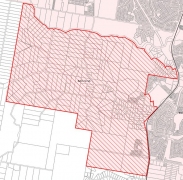 NEW WEBSITE for BAHRS SCRUB
Construction of new site has begun and is available www.bahrsscrub.org.au.
This is a separate website for our SAVE BAHRS SCRUB CAMPAIGN.
If you are at all interested in the biodiversty values of the unique but fragmented vegetation ecosystems and their inhabitants - native species like koalas,platypus - hanging on in South East Queensland please consider volunteering to help with this campaign.
Whatever skills you have can contribute towards creating broader community understanding of the importance of living in harmony with nature and its life rhythms - instead of bulldozing our way into extinction of many species - to the detriment of the human species.
We are developing a contact list for people to become actively involved in the campaign. If you are willing to contribute your skills. energies and time please email usThis email address is being protected from spambots. You need JavaScript enabled to view it. for group membership.
2010 is the International Year of Biodiversity - an indication of how endangered many of the world's species are.
Environment Minister Peter Garrett has axed the Hawke Review's recommendation of an independent watchdog over native forest logging with the power of sanctions for environmental destruction, Australian Greens Leader Senator Bob Brown said in Hobart today.
"Citing community concern Dr Hawke and his panel of experts came up with a clear and sensible plan to prevent the destruction of endangered habitats and fragile wildlife ecosystems in Australia's forests. But Garrett has opted to axe that advice and toady to Labor and the forest industry instead," Senator Brown said
"Garrett has also dumped the long-awaited recommendation of a climate change trigger. This would have enabled the minister to review developments which resulted in huge greenhouse gas emissions."
"On the cusp of the International Year of Biodiversity (to quote Garrett), this is particularly appalling behaviour by our nation's chief environmentalist."
"Which other minister would turn down recommendations to enhance his or her power to do their job properly?" Senator Brown asked.
Environment Minister Peter Garrett released the Final Report by Dr Alan Hawke of the Independent Review of the Environment Protection and Biodiversity Conservation (EPBC) Act 21 December 2009.
"This report has been the culmination of a huge amount of input from all levels of government, environmental groups, businesses, academics and members of the general public," Minister Garrett said.
There is a statutory requirement for the EPBC Act to be reviewed every 10 years. This is the first such review, commissioned by Minister Garrett on 31 October 2008 and was conducted by Dr Hawke and a panel of experts.
"The level of the awareness and concern for the environment in the Australian community has greatly increased in the decade since the EPBC Act commenced operation. Australians are increasingly aware of the need to ensure that our environment and heritage is protected, and that development occurs in an environmentally sustainable way," Minister Garrett said.
Dr Hawke and his team received around 340 written submissions throughout this process, from NGOs, industry bodies as well as interested individuals. Other submissions and comments were received from research groups and academics, individual corporations and Local, State, Territory and Australian Government agencies.
There was extensive face-to-face consultations conducted all over Australia and a number of workshops were also held to tap into the broadest range of views and expertise.
Dr Hawke has prepared a comprehensive report which includes recommendations for significant changes to the Act's operation and administration. The Hawke Report makes 71 primary recommendations as well as numerous conclusions and findings of an advisory nature.
"Dr Hawke's report examines many important and highly complex matters and these are not matters that can be taken lightly. The Government will give careful consideration to the recommendations and their implications in the coming months."
"Dr Hawke's Final Report also makes a recommendation in relation to a proposed ‘greenhouse trigger'. This recommendation has a direct bearing on the Government's response to climate change, and to the CPRS Bill that will be reintroduced into Parliament on 2 February 2010. " "For this reason, I feel it is important that we make clear the Government's policy on this recommendation now. The Government favours a market-based system to reduce our greenhouse emissions, and for that reason if the CPRS is passed there will be no need for a greenhouse trigger to be introduced, even as an interim measure. This is entirely consistent with Dr Hawke's intention."
"Additionally, the Government notes the concerns raised by Dr Hawke in recommendation 38 in the review regarding the current mechanisms in the Act for forest management under Regional Forest Agreements (RFAs), and is committed to working with state governments to improve the review, audit and monitoring arrangements for RFAs, including their timely completion, clearer assessment of performance against environmental and sustainable forestry outcomes, and a greater focus on compliance of RFAs in the intervening years," Minister Garrett said. The Government intends to use upcoming RFA renewal processes to improve the achievement of these outcomes in future RFAs. In light of this, the Government rejects the mechanisms proposed in recommendation 38 and does not propose to review section 38 of the EPBC Act as it currently applies to RFAs.
The Government recognises that the RFA's contain extensive review mechanisms as a framework for continuous improvement and it will principally rely on them to address the issues that Dr Hawke's review has identified.
"On the cusp of the International Year of Biodiversity is a particularly relevant time to release this major review into the operation of the Australian Government's primary piece of environmental legislation. The Government will respond to all other recommendations made by Dr Hawke towards the middle of next year."
"I'm tabling this report out of session because I think it's important people have plenty of time to absorb the many issues and recommendations contained in the report," Minister Garrett said.
Dr Allan Hawke has served with distinction in the Commonwealth Public Service from 1974 to February 2006, and has participated in major inquiries into the Public Service including the Review of Commonwealth Functions, the Review of Commonwealth Administration and the Efficiency Scrutiny Unit.
"I want to thank Dr Allan Hawke and his team comprising the Hon Paul Stein AM, Professor Tim Bonyhady, Professor Mark Burgman and Ms Rosemary Warnock, for the outstanding effort that has gone into this review. It was important that this process sought the broadest possible range of expertise and views. I am confident this has been achieved". Minister Garrett said.
A copy of the Hawke report can be downloaded from the review website: www.environment.gov.au/epbc/review/index.html
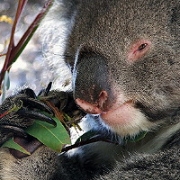 Modern koalas - the sole living member of the diprotodontian marsupial family Phascolarctidae - are among the largest of all arboreal leaf-eaters. To attain this remarkable condition on a diet of eucalyptus leaves, a notoriously poor and somewhat toxic food source, the tree-dwelling marsupials developed unique anatomical and physiological adaptations including specialized chewing and digestive anatomies and a highly sedentary lifestyle. The dramatic differences between the skulls of extinct and modern koalas, especially in the facial region, are probably related to the change to a tougher diet of eucalyptus leaves.
This research has recently been reported at www.physorg.com - from the new findings published as the featured cover article in the current issue of The Journal of Vertebrate Paleontology.
Skull fragments of prehistoric koalas from the Riversleigh rainforests of millions of year ago suggest they shared the modern koala's "lazy" lifestyle and ability to produce loud "bellowing" calls to attract mates and provide warnings about predators but did not share the uniquely specialized eucalyptus leaf diet of the modern koala (Phascolarctos cinereus).